What a Masonry Crew Looks at Before Laying Stone
Stone looks permanent because the work behind it is: what's underneath, how water leaves, and how the stone is tied back.
October 13, 2026 · 4 min read
Walk past a good stone fireplace and you notice the stone. The color, the pattern, the way the light hits it. What you don't see is everything that decides whether it will look that good in twenty winters: what it sits on, how it's tied to the structure, and where water goes when it rains. A mason sees those things first. Here is what a masonry crew looks at before the first stone gets set.
Who PDQ's masons are
PDQ Construction's lead mason is Taylor Pressgrove, who has more than ten years in the trade and began right after high school. Taylor leads a crew of three. PDQ's own line about this service is that masonry may be a new service for the company, but it's not new to the team. The crew builds stone siding, custom firepits and fireplaces, both indoors and outdoors. Having a dedicated masonry crew inside a remodeling company also helps when a fireplace has to fit into a larger project, because the carpenters and the masons are working from the same plan.
What's underneath
Stone is heavy, and a masonry fireplace or a stone wall carries real weight. The first question is always what supports it. A freestanding outdoor fireplace or firepit needs a proper footing, a foundation poured to carry the load and set deep enough that the Kansas frost doesn't heave it. Skip that, and the structure can shift over the first few winters, cracking mortar joints and sending cracks up through the stone.
Indoors, the question is whether the floor can carry the load. A stone hearth and chimney or a heavy veneer wall adds weight a typical floor wasn't framed to hold, so the crew looks at what's below the floor before anyone commits to a design. The best time to learn the answer is before the stone is ordered.
Where the water goes, and how the stone is tied back
Water is the enemy of masonry, and freeze and thaw is how it does its damage. Moisture gets into mortar or stone, freezes, expands and breaks the material from the inside. Over time that opens cracks that let in more water. Good masonry is designed to shed water and let any moisture that does get in find its way out.
On stone siding, that means flashing at the base of the wall and above windows and doors, a way for water behind the stone to drain out, and a clean gap between the stone and the ground. On a chimney or outdoor fireplace, it means a cap that sheds rain and flashing where it meets a roof. On a patio wall or firepit, it means thinking about the top surface, since horizontal surfaces collect water. These are small details that matter more than which stone you choose.
Stone on a wall is usually a veneer, a facing layer fastened to a structure behind it. The way it's attached decides how it behaves. A veneer needs metal ties or a proper mortar bed against a prepared surface, and it needs the right material behind it. Stone stuck to a surface that moves or soaks up water can pop loose. A mason who skips this step may leave a wall that looks great the day it's finished and fails in a few years.
Fireplaces and firepits: a few extra questions
Fire adds its own list of questions. How close does combustible material sit to the firebox? What's the chimney path, and does it clear the roof properly? Where does the wind blow, and where will the smoke go? A firepit that works on a calm day and smokes up the patio every evening is a design mistake, and it's easier to avoid on paper than to fix after the stone is set.
Before you meet with anyone, it helps to have thought about the following:
- Whether you want to burn wood or run gas, since that changes what gets built
- How you plan to use the space: quiet evenings for two or a crowd around the fire
- Where the wind usually comes from, and where seating will be
- Whether you want indoor and outdoor features that match, like a fireplace inside and stone on the patio
- What the stone should relate to, such as your house's brick, siding or trim
Choosing the look
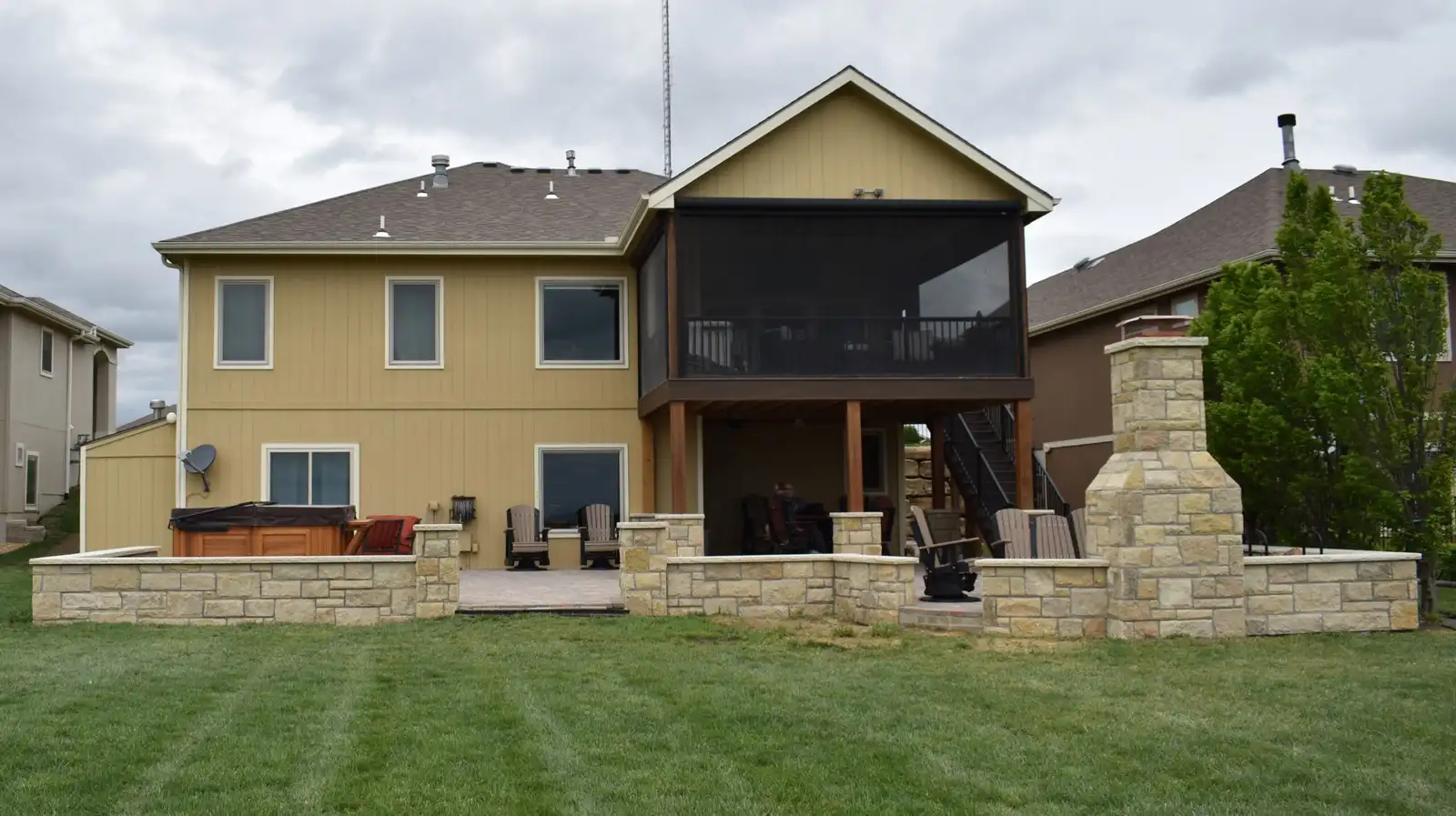
Once the structure makes sense, the fun part starts. Stone comes in a wide range of colors and cuts, from tight, flat ledgerstone to rough, irregular fieldstone to cut limestone. A good rule is to pick something that echoes what's already on your property. A limestone fireplace outside works with a limestone-toned house; a warm brown stone looks at home beside brick. PDQ's masonry work includes projects the company calls The Limestone Family Retreat and Pillars and Poolside, and the rear-yard photo with this article shows a stone patio wall and a limestone outdoor fireplace beside a screened porch.
Get a masonry conversation started
PDQ's consultation and estimate are free. Call (785) 235-1511 to set up a time, and we'll look at the spot where you'd like the fireplace, firepit or stone. You can see more of the crew's work on the Custom Masonry page.
PDQ Construction Inc., (785) 235-1511
Call (785) 235-1511More articles
What a 3D Rendering Settles Before a Remodel Starts
The cheapest place to move an island is on a screen, and the most expensive place is after the framing is up.
Planning a Bathroom You Can Stay In for Good
The best time to make a bathroom safer is before anyone needs it to be.