Replacement Windows and Doors, from Measurement to Final Inspection
A window is only as good as the opening it goes into and the way the water gets steered around it.
October 13, 2026 · 4 min read
Replacing a window looks simple from the street. Old one out, new one in. But the success of the job has less to do with the window than with the opening it goes into and what happens around the edges. This article walks through the stages of a good replacement so you know what to expect and what to ask about, from the first measurement to the final inspection.
Why measuring comes first
Windows and doors are usually made to order, so a measurement mistake isn't a quick fix. Old houses aren't square. An opening can be wider at the top than the bottom, a sill can slope, and a frame can be out of plumb by more than you'd guess. A careful measurer checks the opening in several places instead of trusting one number, and notes the quirks that will matter on install day.
PDQ Construction has an estimator, Will Potts, whose 25-plus years of experience center on windows, doors and siding. Measuring is where that experience pays for itself, since most surprises can be spotted before the order goes in.
Choosing the window
PDQ specializes in Pella windows and installs other brands as well, and Pella is one of the company's partners. That combination is useful. You aren't pushed into one product because it's the only one a crew knows how to hang, and you also get a crew that installs one brand often enough to know its details well.
When you compare windows, the useful questions are practical ones. How does the window open and close? Is it easy to clean from the inside? Does the style suit the house, including the grid pattern and the frame color? For doors, how does it seal, and how does the hardware feel in the hand? Spend your time on those and not on spec-sheet comparisons that don't mean much until the window is in the wall.
Out with the old: what the crew finds
The moment the old window comes out is the moment the truth shows up. A window that has leaked for years may have left soft, stained or rotted wood at the sill or the framing below it. Better to find that on install day, with the opening bare, than to bury it behind a new window and trim.
If the framing is damaged, it gets repaired before anything new goes in. A new window set into rotten wood won't hold, and the leak that ruined the old one will ruin the new one. This is one of the main reasons to hire a crew that does this work every day and not a handyman with a caulk gun.
Setting windows and doors, and steering the water
Installation is about two things: holding the window square and sealing it against water. The window has to sit level, plumb and square in the opening, shimmed so it won't bow or bind. Then comes the part you never see. Flashing, usually a combination of membrane and tape, goes on in a specific order so water that gets behind the siding runs down and out instead of in. The order matters. Lap it wrong and water runs into the wall.
The gap between the window frame and the rough opening gets filled with insulation made for that job, and the exterior edges get sealed. Then trim, siding and interior finish go back on. Each layer is small, but together they decide whether the window stays dry and draft-free for decades.
An entry door gets the same attention to the opening, the sill and the flashing, and the threshold is where water likes to get in. A door must also swing freely, latch cleanly and sit even on its hinges. A door that is a hair off will rub, stick or leave a gap you can see light through. These are details a skilled installer sets right during the install, not after.
PDQ's crews and the final inspection
PDQ keeps several dedicated window and door install crews, with lead installers James Swope, Austin Pletcher and Jay Hughes. The company is a certified window and door installer, and describes its process as running from initial measurement to final inspection.
At the end of the job, you can do a simple check yourself, and a good crew will do it with you. Here is what to look at:
- Open and close every sash and door several times, and confirm each one moves smoothly and locks firmly
- Look at the interior trim for even gaps and clean corners
- Check the exterior caulk and trim for neat, continuous lines
- Look at the screens, hardware and glass for scratches or marks
- Ask what the crew did about any rot or damage they found during removal
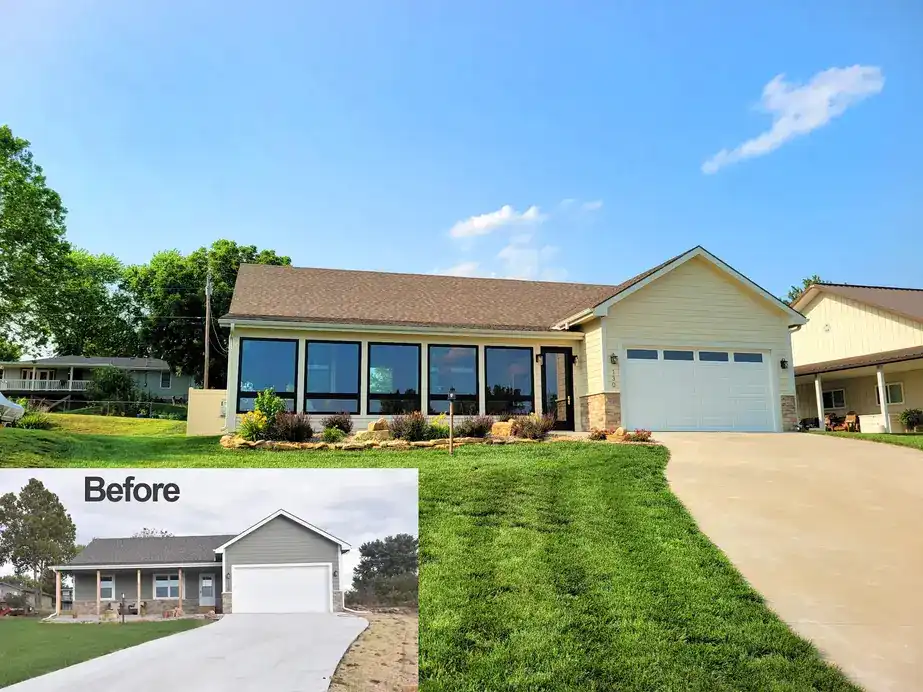
The ranch exterior in the photo with this article shows what a full exterior refresh can look like when windows, doors and siding are handled together. Thinking about them as one project, and not as three unrelated jobs, often makes sense because they all meet at the same edges.
Start with a measurement
PDQ's initial consultation and estimate are free. Call (785) 235-1511 to schedule a visit, and we'll look at your windows and doors with you. The Windows & Doors page has more about the crews and the brands PDQ works with.
PDQ Construction Inc., (785) 235-1511
Call (785) 235-1511More articles
What a 3D Rendering Settles Before a Remodel Starts
The cheapest place to move an island is on a screen, and the most expensive place is after the framing is up.
Planning a Bathroom You Can Stay In for Good
The best time to make a bathroom safer is before anyone needs it to be.